P1: 0
Ready to Play
P1 = Mouse (Left Paddle) • P2 = Keyboard (Right Paddle) • Right-click to Pause/Resume
P2: 0
0 minutes read
The Largemouth Bass (Micropterus salmoides) is one of the most popular and iconic freshwater fish species in North America. Revered for its aggressive strikes, aerial acrobatics, and overall fight, it’s a favorite target among anglers. As an apex predator in warmwater ecosystems, it plays a critical role in maintaining balance among fish populations. In Wisconsin, largemouth bass are widely distributed throughout lakes, rivers, ponds, and flowages, making them an integral part of the state's sportfishing culture. Their abundance, catchability, and sporting qualities make them ideal for everyone from casual weekend fishers to competitive tournament anglers.
Commonly known as the Largemouth Bass, this species is scientifically classified as Micropterus salmoides. It belongs to the broader animal group of fish and is native to eastern and central North America. In Wisconsin, they can be found statewide in a wide variety of freshwater habitats including lakes, rivers, and ponds. With a conservation status of "Least Concern," the largemouth bass enjoys a healthy population. In the wild, individuals typically live between 10 and 16 years, growing to an average size of 12–20 inches and 1–5 pounds, though trophy specimens can exceed 10 pounds. As carnivores, they occupy a key ecological niche as apex predators within their ecosystems.

Largemouth bass are deep-bodied, robust fish built for ambush and speed. Their streamlined shape enables quick strikes, while their coloration—usually olive-green to dark green with a prominent horizontal black stripe—provides camouflage in weedy environments. They feature a separated dorsal fin, with a spiny front section and a soft-rayed rear section. One of their most distinctive features is their massive, bucket-like mouth, which extends past the eye and is filled with small, gripping teeth. Sexual dimorphism is minor, with females generally growing larger than males. There are no formally recognized subspecies, though size and color variation may exist regionally due to genetic and environmental factors. As members of the sunfish family (Centrarchidae), their evolutionary history is closely tied to warm, shallow waters with abundant vegetation.
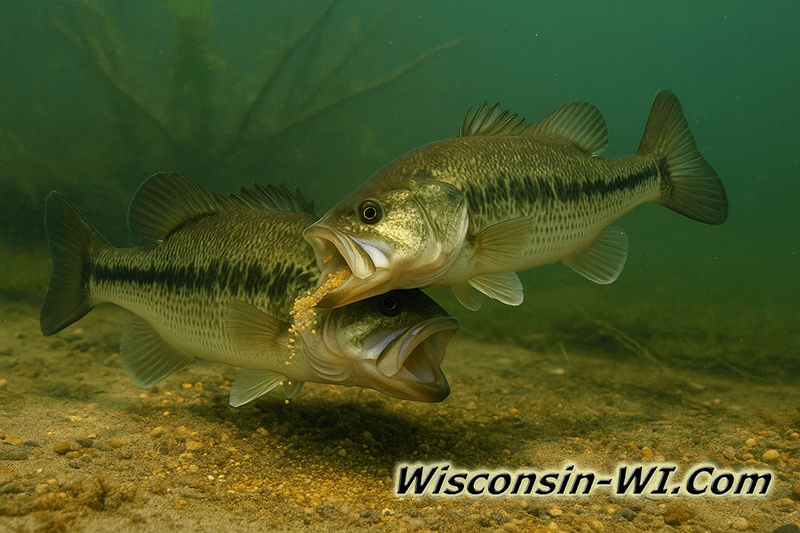
Largemouth bass rely heavily on their lateral line system to detect vibrations and water movement, allowing them to detect prey even in low-visibility conditions. While they do not vocalize, they engage in non-verbal communication, especially during spawning. Courtship and nest-defense behaviors include body circling, nudging, and posturing to deter intruders or attract mates.
This species demonstrates a high degree of habitat adaptability. In ponds, largemouth bass thrive around vegetated margins and tolerate fluctuating oxygen levels. They are less common in creeks but can inhabit slower, warmer stretches. In lakes, they prefer areas with abundant cover such as submerged logs, weedlines, and shallow bays. Flowages and reservoirs offer excellent bass habitat, especially where submerged timber and variable depth provide structure. In rivers, they seek out eddies, backwaters, and quieter pools with plenty of cover. Although they are not typically found in trout streams due to their temperature and oxygen needs, they perform well in clear to moderately turbid waters. They prefer depths between 2 and 15 feet and thrive in water temperatures ranging from 60°F to 80°F. Seasonal movement is common: they move into the shallows to spawn in spring, shift to deeper water in summer heat, and return to transition zones in the fall. Wisconsin hotspots for largemouth bass include Lake Winnebago, the Madison Chain of Lakes, and the backwaters of the Mississippi River.
Largemouth bass perform best in water temperatures between 70°F and 75°F. They require oxygen levels of at least 4 mg/L, with a preference for levels between 5 and 7 mg/L. They are most comfortable in pH ranges from 6.5 to 8.5 and can tolerate moderate turbidity, although clearer water supports better hunting efficiency. Their preferred substrates include sand, gravel, and vegetative bottoms.
As opportunistic carnivores, largemouth bass feed on a wide range of prey, including minnows, bluegill, frogs, crayfish, insects, leeches, and even small birds. Their feeding behavior is predominantly crepuscular, with peak activity occurring at dawn and dusk. They are ambush predators that rely on stealth and explosive strikes, typically launching attacks from cover. Their diet changes seasonally: in spring they favor insects and crayfish, summer brings a shift toward frogs and baitfish, and in the fall, they feed aggressively on shad and perch to build reserves for winter. Their role in the ecosystem is critical, acting as a keystone predator that regulates forage fish populations and maintains aquatic balance.
In winter, largemouth bass retreat to deeper, slow-moving areas where their metabolism slows, and feeding activity decreases. During spring, they migrate to shallow flats and gravel bottoms for spawning. Males build and guard nests while aggressively defending them from predators. In summer, they seek out shady cover and cooler layers such as the thermocline to conserve energy and avoid extreme heat. By fall, they move toward structure transitions and begin aggressively feeding to prepare for winter. This cyclical behavior ensures survival across all seasonal conditions.
|
Season |
Habitat Use |
Key Behaviors |
|---|---|---|
|
Winter |
Deep pools, slow zones |
Lethargic, minimal feeding, low metabolism |
|
Spring |
Shallows, spawning flats |
Spawning, aggressive nest guarding, feeding |
|
Summer |
Weedlines, shady structure |
Avoid midday heat, active at low light |
|
Fall |
Structure edges, baitfish zones |
Aggressive feeding to prepare for winter |
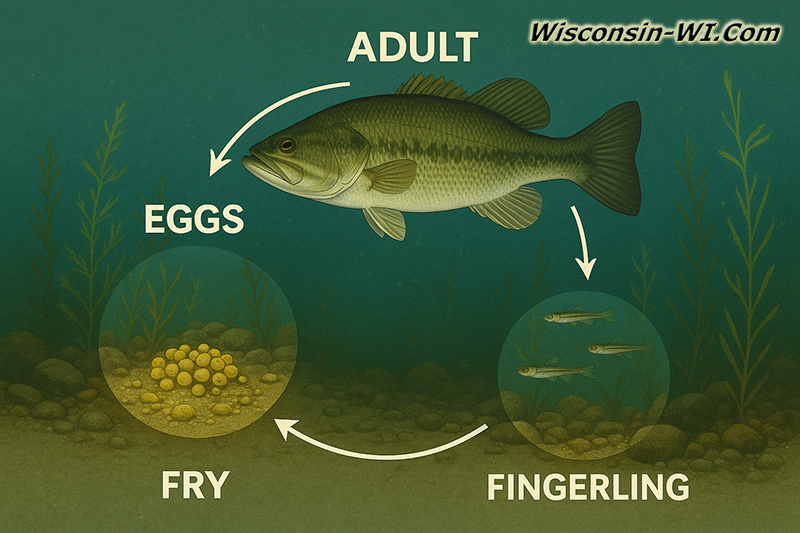
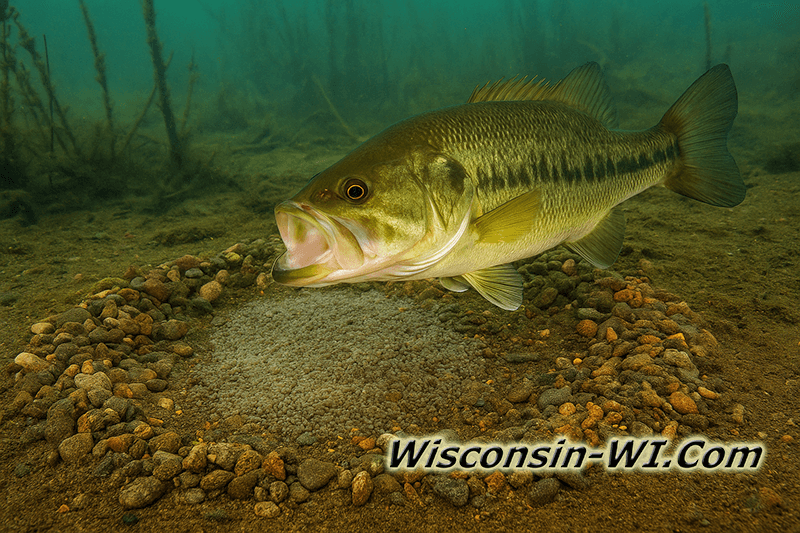
Spawning occurs in Wisconsin from late April through June, once water temperatures exceed 60°F. Males build circular nests in shallow waters, fanning away debris and attracting females. After spawning, females may lay up to 20,000 eggs, which males fertilize and guard. The incubation period lasts 2 to 5 days depending on temperature. Males continue to protect the nest until fry disperse. Young bass progress through developmental stages from fry to fingerling to subadult before reaching maturity. Under good conditions, they can grow to legal catch size (14 inches) within 3–4 years.
In Wisconsin, largemouth bass are classified as regulated game fish managed by the Wisconsin DNR. The general open season runs from the first Saturday in May through March 1, although exceptions exist by zone. Most waters enforce a daily bag limit of five fish with a 14-inch minimum length requirement. Legal methods of harvest include rod and reel, and tip-ups for ice fishing. Spearing is not permitted. Catch and release is encouraged, especially for larger females during spawning. Anglers are advised to handle fish gently, use barbless hooks when possible, and limit air exposure during unhooking. Stocking and tagging programs are minimal due to their strong natural reproduction.
Effective live baits for largemouth bass include minnows, nightcrawlers, frogs, and leeches. Artificial lure options vary by season: soft plastics and jerkbaits work well in spring, topwater lures and spinnerbaits dominate summer, and crankbaits and jigs shine in fall. In murky water, bright and noisy lures are recommended, while natural colors perform best in clear conditions. Ideal rod-and-reel combos include medium-heavy rods paired with baitcasting or spinning reels using 12–17 lb test line.
Although not a primary target during ice season, largemouth bass can still be caught through the ice. Target depths between 8 and 15 feet near structure or weedbeds. Use tip-ups baited with large shiners or jigging rods tipped with soft plastics. Feeding activity is low in winter, so timing and patience are key. Handle fish with care to avoid damage to their protective slime coat and internal organs during cold exposure.
Filleting largemouth bass is moderately easy, and the resulting meat is white, flaky, and mild in flavor. Bone presence is minimal after proper filleting. Preferred cooking methods include pan-frying, baking, grilling, and using them in fish tacos. Popular Wisconsin recipes include traditional Friday Fish Fry dishes, lemon-baked bass, and classic shore lunch fare.
Largemouth bass are susceptible to a few diseases and parasites, such as Largemouth Bass Virus (LMBV), anchor worms, and black spot disease. While somewhat tolerant of environmental fluctuations, they prefer stable oxygen levels and neutral pH conditions. Their resilience makes them adaptable, but they remain vulnerable to habitat destruction, shoreline development, and water pollution—especially from sedimentation and agricultural runoff.
Eggs and juvenile bass face threats from numerous predators including northern pike, muskie, herons, otters, and snapping turtles. Adult bass can defend themselves effectively with camouflage, speed, and nest-guarding behavior. Cannibalism is not uncommon; larger bass often consume smaller members of their own species. Egg survival rates depend heavily on water temperature, oxygen availability, and nest disruption.
Largemouth bass are relatively easy to handle but should be supported properly and unhooked with wet hands to avoid injury. They face significant pressure from recreational fishing and boat traffic, especially during spawning season. In clear water, spawning behavior is often visible near shorelines. They are frequently recorded in citizen science projects like iFishWisconsin and state creel surveys, contributing to long-term conservation data.
In winter, bass slow down and congregate in deep cover. Spring marks a surge in activity and spawning behavior. Summer sees them using shade and thermoclines for comfort, and fall triggers intense feeding before metabolic slowdown. These seasonal shifts reflect both instinctive survival strategies and responses to environmental cues.
|
Season |
Habitat Location |
Behavior Highlights |
|---|---|---|
|
Winter |
Deep weed clumps, structure |
Slow metabolism, ice fishing possible |
|
Spring |
Shallows and flats |
Spawning, nest guarding, peak feeding |
|
Summer |
Mid-depth weeds and cover |
Lurking in shadows, ambushing prey |
|
Fall |
Transition areas, drop-offs |
Follows baitfish, aggressive pre-winter feeding |
The best times to target largemouth bass are early morning, late evening, and on overcast days. Productive baits include spinnerbaits, topwater frogs, crankbaits, and soft plastic worms. Popular fishing spots in Wisconsin include Lake Winnebago, Eagle River Chain, and the Madison lakes. Anglers should use leader material when fishing near toothy predators and match rod strength to lure size. Responsible catch-and-release and ethical angling practices are essential.
Largemouth bass are sometimes confused with smallmouth or spotted bass. The most reliable distinguishing feature is that the largemouth’s jaw extends past the eye. It also features a solid black lateral stripe, unlike the vertical bars of a smallmouth bass. In clear waters, identification is straightforward with close inspection.
This species contributes significantly to the recreational economy through fishing licenses, tournaments, guiding services, and tourism. The meat is excellent for eating, particularly in smaller individuals. Largemouth bass have deep cultural significance, appearing in media, education, and outdoor programming. Wisconsin recognizes them with local derbies, bass clubs, and statewide tournaments. The state record is 11 lbs 3 oz (Flambeau River, 1940), while the world record stands at 22 lbs 4 oz (Georgia, 1932).
Largemouth bass are legally fishable in Wisconsin under DNR regulation. They are not federally listed and do not pose an invasive risk. Minimal stocking is required due to their self-sustaining populations. Ongoing conservation includes shoreline restoration, aquatic plant management, and angler education. Local habitat protections and zoning laws help preserve breeding and nursery areas.
The Wisconsin DNR, Wisconsin Bass Federation, and various local watershed groups collaborate on bass habitat and education programs. Anglers can get involved through reporting catches, volunteering for surveys, and participating in citizen science. Habitat restoration projects often include adding woody debris, conserving aquatic vegetation, and reducing runoff. Bass also feature in state-led tagging and monitoring efforts to improve management.
Use weedless rigs in dense vegetation to avoid snags. Target shallow cover during low-light hours. Match your bait to local forage species in both size and color. Practice quick and gentle handling, especially during hot summer days. Use fish finders or sonar to locate submerged structure like drop-offs and weedlines.
Pros include regulating forage fish populations, enhancing sportfishing tourism, and serving as indicators of water quality. Cons involve the potential to over-dominate small waterbodies, outcompete native species when introduced, and occasionally reduce populations of stocked gamefish.
✅ Pros:
❌ Cons:
Largemouth bass are a cornerstone of Wisconsin’s freshwater heritage. They provide excitement for anglers, balance aquatic food webs, and serve as an engaging subject for conservationists and outdoor educators alike. From youth fishing events to advanced tournament angling, they are a species worth protecting, studying, and enjoying.
📸 Caught a Largemouth Bass? Tag @WisconsinWildWatch and use #WIWildlife to share your story!
📝 Want to contribute data? Join DNR monitoring or citizen science efforts.
The term panfish refers to a diverse group of small, freshwater fish species that are popular with anglers for their ease of catching, excellent taste, and wide availability in North American waters—including throughout the state of Wisconsin. A panfish is generally any fish that is small enough to fit whole into a frying pan, making them ideal for shore lunches, fish fries, and family meals. These fish are typically targeted using simple fishing gear such as light spinning rods, bobbers, live bait, and micro jigs.
Unlike bass, trout, or walleye—which are defined by biological taxonomy—the word <strong><em>“panfish”</em></strong> is not a scientific term. Instead, it’s a casual, culinary-inspired label used by anglers and fisheries managers to describe a group of **small-bodied, edible fish**. In Wisconsin and many other U.S. states, “panfish” includes species like **bluegill**, **crappie**, **yellow perch**, **pumpkinseed**, **rock bass**, and various **sunfish hybrids**.
The Wisconsin Department of Natural Resources (DNR) classifies the following species under panfish regulations:
Official Wisconsin Panfish Species
These species often share similar size classes, feeding habits, and are found in overlapping habitats. Wisconsin often manages these species with combined panfish bag limits and daily catch regulations on a per-lake basis.
H4: What Makes a Fish a Panfish?
Small to medium size (usually under 12 inches)
Edible and tasty white flesh
Found in lakes, rivers, and ponds
Easily caught on basic tackle
Often caught in large numbers
Fit whole into a standard frying pan
Panfish are known for their **mild flavor**, **flaky texture**, and ease of cleaning. Because they reproduce prolifically and feed aggressively, they’re ideal for beginner anglers, youth fishing events, and year-round recreational fishing
In Wisconsin, panfish are a staple of local angling culture. They're abundant in nearly every body of water—from backwoods ponds to major fisheries like Lake Winnebago and the Mississippi River. They are easy to catch with minimal gear, making them a perfect entry point into fishing for children and families. And because they’re delicious when fried or baked, they remain a favorite for fish fries and lakeside meals across the state.
🐟 The term “panfish” dates back to early American settlers who pan-fried their catch whole.
📏 Many panfish are regulated under grouped limits rather than individual species.
🧊 Panfish are the top target species for Wisconsin ice fishing.
🔄 Because of their fast reproduction rates, harvesting panfish can help balance lake ecosystems.
In summary, a panfish is not defined by biology, but by size, flavor, and how it's prepared. If the fish is small enough to cook whole in a frying pan, you’ve likely caught a panfish. In Wisconsin, these beloved species are deeply tied to local traditions, making them a cornerstone of family fishing trips, fish fries, and the state's angling heritage. Whether you're casting from a dock or ice fishing in the Northwoods, panfish are always biting somewhere.
Rusk County, Wisconsin—sometimes referred to as Rusk County WI or simply Rusk WI—is a scenic destination in northwestern Wisconsin. Home to expansive forests, abundant rivers, and charming small towns like Ladysmith and Weyerhaeuser, Rusk County is a year-round retreat for outdoor lovers, families, and retirees alike. From camping along the Flambeau River to discovering wildlife in the Murphy Flowage County Park, Rusk County invites exploration, relaxation, and opportunity.
Covering approximately 931 square miles, Rusk County lies between Rice Lake and Tomahawk. It’s surrounded by Sawyer, Price, Taylor, Chippewa, Barron, and Washburn counties. Known as the “Land of Four Rivers,” Rusk County includes the Flambeau, Chippewa, Jump, and Thornapple Rivers—ideal for fishing, canoeing, and kayaking.
The largest city and county seat is Ladysmith. Other charming towns include Weyerhaeuser, Bruce, Sheldon, Hawkins, Tony, and Ingram. With a population just over 14,000, Rusk County offers a strong sense of community and a peaceful rural lifestyle.
Rusk County supports a diverse economy including forestry, tourism, healthcare, and light manufacturing. Affordable land and homes make it attractive for farming, families, or remote workers seeking a scenic rural life.
From forested trails to friendly communities—Rusk County WI is waiting for you.
Everything You Need to Know for a Successful Walleye Fishing Experience
Walleye fishing in Wisconsin is a time-honored tradition that attracts anglers from all over the country. Known for their elusive nature and delicious flavor, walleye are one of the most sought-after game fish in the state. Whether you are a seasoned angler or a beginner, this guide covers all aspects of walleye fishing, from bait selection and gear to the best fishing locations and seasonal strategies. By following these tips and techniques, you can increase your success rate and enjoy the thrill of catching this prized freshwater species. Dive into this comprehensive guide and make the most of your walleye fishing adventure in Wisconsin.
Also Checkout Types of Wisconsin Fish | Fishing | Live Bait | Types of Fishing
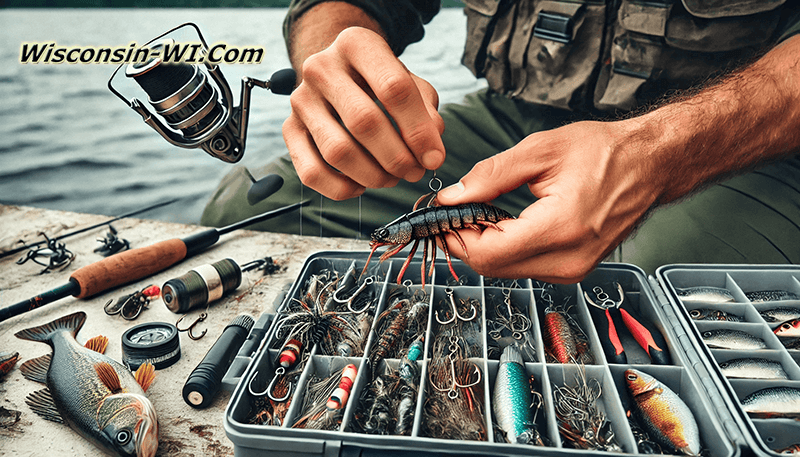
Live bait is one of the most effective ways to catch walleye, as it mimics their natural prey. Some of the best live baits include minnows, nightcrawlers, and leeches. Minnows are especially effective in colder months when walleyes are less active, while nightcrawlers and leeches perform well in warmer waters. When using live bait, it is crucial to match the size of the bait to the walleye's feeding habits in that particular season. Hooking live bait properly and presenting it naturally will significantly increase your chances of a successful catch.

Artificial lures are another excellent option for walleye fishing, especially when covering large areas of water. Crankbaits, jigs, soft plastics, and jerkbaits are among the top choices for enticing walleye. Crankbaits are ideal for trolling deeper waters, while jigs tipped with soft plastics work well for vertical jigging. Selecting the right color and action based on water clarity and lighting conditions can make a significant difference in your success. A slow, steady retrieval technique is often the most effective way to trigger walleye strikes.
Setting up your walleye rig properly can make a big difference in your fishing success. The slip bobber rig is ideal for suspended walleye, while the Lindy rig is great for bottom fishing. Spinner rigs work exceptionally well in lakes and flowages where walleye feed on smaller fish. Choosing the right rig depends on the fishing location, depth, and season. Always ensure that your hooks are sharp and your line is strong enough to handle the fight of a walleye.
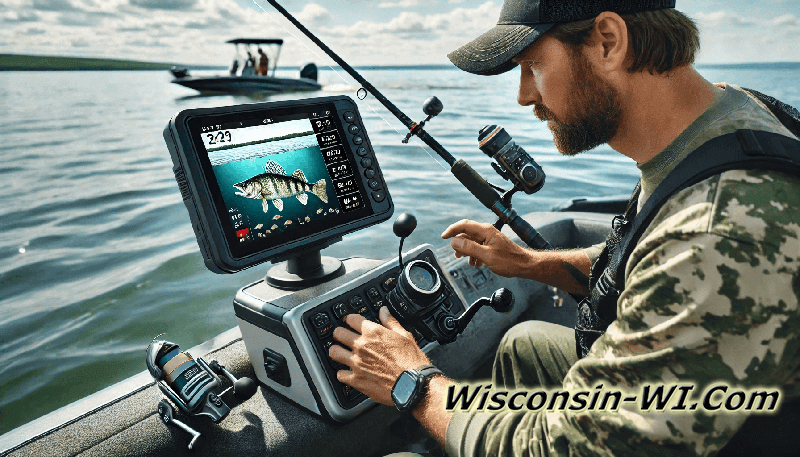
Having the right gear can dramatically improve your walleye fishing experience. A medium-light to medium-action spinning rod paired with a quality reel is perfect for most walleye fishing applications. Braided line with a fluorocarbon leader is an excellent choice for better sensitivity and durability. Fish finders can be invaluable tools for locating walleye, especially in deeper waters. Look for fish finders with high-resolution imaging and GPS capabilities to enhance your fishing efficiency.
Choosing the right boat for walleye fishing depends on the type of water you plan to fish. Deep-V aluminum boats are ideal for big lakes and rough waters, while flat-bottom boats work well in rivers and shallow areas. A boat with a quiet trolling motor and ample storage for gear and bait will provide the best experience. Electronics such as fish finders and GPS navigation systems can help locate prime fishing spots more efficiently. Safety equipment, including life jackets and navigation lights, should always be onboard.
Rivers provide excellent walleye fishing opportunities year-round. Walleye tend to congregate in deep holes, near current breaks, and along submerged structures. During the spring, walleye move upstream for spawning, making them easier to locate. Using jigs and live bait along current seams is an effective way to catch river walleye. Monitoring water temperature and current flow can help determine the best fishing spots.
Although less common, some Wisconsin ponds are stocked with walleye, offering a unique fishing experience. These smaller bodies of water are ideal for shore fishing and using live bait such as minnows and worms. Since walleye in ponds are often more cautious, a stealthy approach is necessary. Fishing at dawn and dusk, when walleye are most active, increases the chances of success. Light tackle and small jigs work best for these confined waters.
Wisconsin’s flowages, or man-made reservoirs, are prime locations for walleye fishing. These waters have a mix of deep channels, shallow flats, and submerged timber, creating excellent walleye habitats. Trolling with crankbaits along contour lines can yield great results. Vertical jigging near submerged structures is also highly effective. Understanding the seasonal movements of walleye within a flowage will help anglers target the most productive areas.
Lakes are the most popular destinations for walleye fishing in Wisconsin. Walleye prefer rocky points, drop-offs, and weed edges where they can ambush prey. Using bottom bouncers with crawler harnesses is an excellent technique for covering large areas. Early morning and late evening are the best times to target walleye in lakes. Changing lure colors and presentations based on water clarity and depth can increase your chances of landing a trophy fish.
Deep-water fishing for walleye requires specialized techniques and equipment. During the summer and winter months, walleye often retreat to deeper water to find stable temperatures. Using weighted jigs, drop-shot rigs, and deep-diving crankbaits can help reach these fish. A quality fish finder is essential for locating walleye in deep waters. Slow, precise movements are key to enticing bites from walleye in deeper environments.
Spring is one of the best times to fish for walleye as they move to shallow waters for spawning. Targeting rocky shorelines, river mouths, and feeder creeks with jigs and minnows is highly effective. Water temperature plays a crucial role in walleye activity, with optimal temperatures ranging between 40-55°F. Slow retrieves and finesse presentations work best in early spring. Post-spawn walleye tend to disperse, making trolling a good option.
During summer, walleye often move to deeper, cooler waters during the day and become more active at night. Trolling with crankbaits and using slip bobber rigs in deep weed edges can be productive. Early mornings and late evenings provide the best opportunities. Pay attention to thermoclines, as walleye tend to hover near these temperature breaks. Covering a lot of water with search baits can help locate active fish.
Fall is a prime time to catch large walleye as they feed aggressively before winter. Focus on rocky points, drop-offs, and baitfish-rich areas using jigs and crankbaits. Cooler water temperatures make walleye more predictable and willing to strike. Slow trolling and vertical jigging produce excellent results. Fishing closer to shore is more effective as walleye move into shallower waters to hunt.
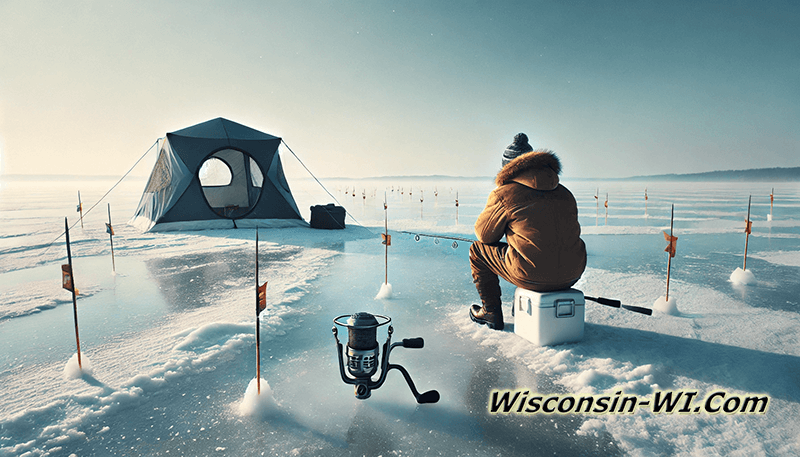
Ice fishing for walleye is a favorite winter pastime in Wisconsin. Jigging with spoons, using tip-ups with live bait, and targeting drop-offs near lake basins are effective tactics. Early morning and dusk are peak times for ice fishing success. Using sonar and GPS mapping can help find walleye hotspots under the ice. Safety is crucial—always check ice thickness before venturing out.
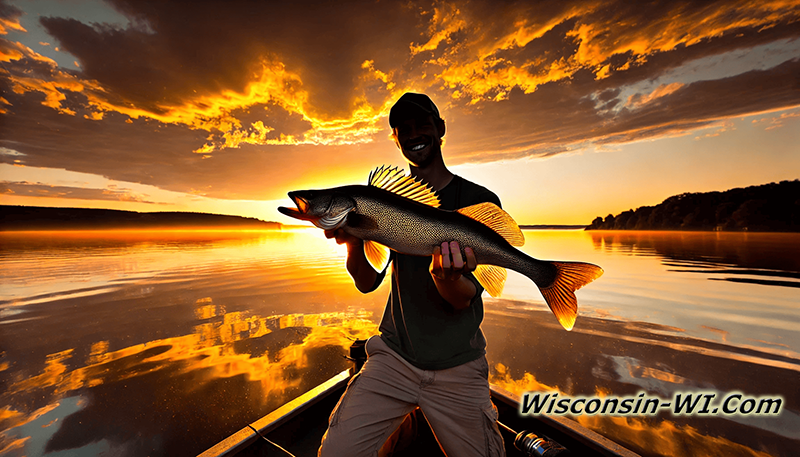
Wisconsin offers some of the best walleye fishing opportunities in the country. Understanding seasonal behaviors, using the right gear, and fishing in the right locations will improve your success rate. Always check local regulations and practice catch-and-release when necessary to preserve walleye populations. Whether fishing in rivers, lakes, or through the ice, staying adaptable and patient is key. By following this ultimate guide, you’ll be well-equipped to enjoy a rewarding walleye fishing experience year-round!
Wisconsin Public Land
Website Pages

To install this Web App in your iPhone/iPad press icon.
 And then Add to Home Screen.